Tuesday, February 4, 2025

Closing the Chapter: Q3 Reflections

This quarter has been a whirlwind of learning! I've discovered the fascinating world of HTML tags and how they're the building blocks of web pages. I started with the basics – understanding how tags work, how to create headings, paragraphs, and links. Then, I moved on to more complex elements like images, tables, and forms. The most exciting part was learning how to structure content using nested and un-nested lists. I now understand how to create organized and visually appealing lists to present information effectively. I can now confidently create simple, yet functional web pages.

Initially, remembering all the different HTML tags and their attributes was a challenge. The syntax can be a bit tricky, and it was easy to make mistakes, like forgetting closing tags or misplacing attributes. I also struggled with properly nesting lists. Debugging my code was sometimes frustrating, especially when dealing with unexpected display issues. I tackled the challenge of remembering HTML tags by simply creating flashcards and using online resources. When I encountered errors, I used the browser's developer tools to inspect the HTML and identify the source of the problem. I also found that working through tutorials and examples helped me grasp the concepts better. For nested lists, I started with simple examples and gradually increased the complexity.

Moving forward, I plan to explore more advanced HTML concepts, such as semantic HTML, CSS for styling, and JavaScript for interactivity. I want to build more complex and visually appealing web pages, i will also continue practicing regularly, focusing on improving my debugging skills and deepening my understanding of HTML's structure and semantics. I aim to explore responsive web design principles to ensure my web pages are accessible across different devices.

Monday, February 3, 2025

Red For Wealth!

 Well, you want to ask why Filipinos are celebrating Chinese New Year? And it’s not just about the firecrackers. “It’s a much deeper, richer story that is built into the very fabric of our culture.” To put it another way, consider a mouthwatering adobo it’s uniquely Filipino yet with Spanish and Chinese inflections. Chinese New Year is a little bit like that, a delicious mix of traditions.


It all dates back to centuries ago, when Chinese traders and settlers arrived in the Philippines. They carried not only their wares, but also their customs and beliefs. With time, these customs intertwined with our own, and what blossomed was a unique Filipino-Chinese culture that still thrives today. It’s not only about heritage, either many Filipinos even those with no direct Chinese ancestry, join in the festivities. Why? Because it's fun! And because it has become part of who we are.


Chinese New Year, or Lunar New Year as some people refer to it, isn’t just a holiday it’s a feeling. That feeling of family reuniting, the comforting smell of tikoy the thrill of receiving ang pao or they call it  lucky money!. It is about wishing for good fortune and success in the coming year, dreams and aspirations we all hold, no matter the background.

It is true? It has gotten a little commercialized, red fills the malls, and business is certainly playing on the festive spirit. Yet for all the commercial trappings, the essence of the occasion — a time for family and friends, good food and good wishes —endures. It stands as a reminder, so based on with so many differences of cultures and beliefs, we are still able to rejoice together, a message of hope and renewal. So when you next come across a Filipino celebrating the Lunar New Year don’t just see firecrackers and red frilly lanterns, see a gorgeous amalgam of cultures, a testament to our common humanity forever reminding us of our own humanity and a whole lot of fun.

Sunday, January 26, 2025

The Hidden Gem: Vigan City

 Vigan's transformation from a busy municipality to a flourishing city is evidence of its resilience and strategic significance. Vigan, which was founded during the Spanish colonial era, swiftly rose to prominence as a major commerce hub thanks to its distinctive architecture, which intriguingly combines indigenous and Spanish influences. It laid the groundwork for its future prosperity as a municipality by promoting cultural and economic development. Its vital economy and advantageous coastline location guaranteed its ongoing significance in the area.

One important turning event was the achievement of cityhood in 1948. A more intricate administrative framework was brought about by this higher status, which made it possible to provide its expanding population with better infrastructure and services. The preservation of Vigan's rich legacy was given top priority by the city's leaders, who a knowledged its enormous cultural significance. International renown would eventually result from this dedication to conservation.

https://getaway.ph/blog/arts-and-culture/explore-old-world-vigan-for-a-dose-of-culture-and-history/

Vigan's historic district was named a UNESCO World Heritage Site in 1999, marking the pinnacle of its efforts. Vigan's position on the international scene was solidified by this esteemed honor, which also increased tourism and the city's economy. As a tribute to its tenacity and timeless appeal, Vigan is a thriving example of a city that successfully strikes a balance between the demands of modern advancement and the preservation of its rich past.

Saturday, January 4, 2025

A Cozy Christmas

This year's Christmas holidays were filled with warmth, laughter, and unforgettable memories. I spent most of the holiday season with my family, and it was a time to reflect on all the love and joy we share.

πŸ’•
On Christmas Eve, we gathered at our house to celebrate the Filipino traditional thing that we called "noche buena" together. The familiar scents of "hamon" filled the air as we started to ready the food, each telling a story from past holidays. I loved hearing the old stories from when my siblings and i were younger.

Christmas morning arrived, and with it, the excitement of exchanging gifts. We all sat around the living room, carefully unwrapping presents, with expressions of surprise and joy lighting up our faces. The morning's highlight was when my nephew opened his gift—a huge toy gun he had been dreaming about. His face lit up, and it was priceless to see how much he appreciated it.

πŸ’š

This Christmas was more than just a holiday, it was a beautiful reminder of the importance of spending time with those we care about, celebrating the joy of togetherness, and creating memories that will last a lifetime.

Later in the day, we invited some close friends over for a Christmas dinner. The house was filled with the sounds of laughter and friendly chatter as we enjoyed a traditional holiday feast. We exchanged stories, played games, and sang along to Christmas carols. The atmosphere was so full of love and joy, it felt like a reminder of what really matters: the connections we share with the people who mean the most to us.

πŸŽ„
As we sat around the table, full and content, I couldn't help but feel incredibly grateful for the time spent with loved ones. Christmas is always a reminder to cherish the present moment, appreciate family, and enjoy the simple pleasures in life—whether it’s a good meal, a shared laugh, or a quiet moment of reflection.

Friday, January 3, 2025

"New Year, Better Me"

As the calendar flipped to 2025, I couldn't help but feel a sense of renewal and excitement. The New Year has always felt like a fresh start, a chance to leave behind what no longer serves me and embrace new opportunities. This year, the phrase "New Year, New Me" resonates more than ever as I reflect on the past and plan for the future.

⭐

The celebrations started with a cozy family gathering. We spent New Year’s Eve together, sharing a delicious meal and reminiscing about the good times from the past year. It was a peaceful, joyful evening, and we welcomed 2025 with smiles, hugs, and a sense of gratitude for the people we hold dear. As the clock struck midnight, we made our resolutions, not with pressure or high expectations, but with hope and optimism for the journey ahead.

This year, I’m committed to focusing on personal growth and embracing positive changes. One of my resolutions is to invest more time in self-care and wellness. I plan to prioritize my physical and mental health by establishing a consistent exercise routine and taking time to unwind and recharge. I’ve also decided to dedicate more time to pursuing my hobbies and passions, whether it’s learning a new skill, reading more books, or exploring creative outlets like painting.

πŸ’›
Another big change I’m planning this year is to step outside my comfort zone more often. I want to challenge myself to try new experiences and expand my horizons. Whether it’s traveling to a new destination or taking on a new project at work.
I’m determined to embrace change with an open mind and a positive attitude. Spending more quality time with family is also a top priority. I’ve realized how important it is to nurture these connections, and I plan to make time for regular family get-togethers.


🌟
As I look ahead to 2025, I’m excited for the opportunities that lie ahead and the growth that will come with them. "New Year, New Me" is more than just a clichΓ©—it's about embracing the potential for change, setting meaningful goals, and taking action toward creating the life I want to live. This year, I’m ready to embrace the new beginnings that come with a fresh start.

Wednesday, December 4, 2024

Decoding HTML: Lessons Learned in the Second Quarter

 Thinking of the second quarter, in which it was decided to learn HTML coding, I see how much I have improved in both technical skills and practical skills, up to this point. This past quarter of work has been enlightening, particularly because I got to see the basics of HTML, which powers web development.

πŸ’—
In the beginning, the ideas of HTML tags, attributes, and elements were too much. A lot to take in, ranging from learning the layout of a webpage to learning semantic HTML elements and how they interact to process coherent layouts. But by the time I got there, I started to understand how all these components combine to form the whole web design and development story.

A very valuable lesson that can be drawn is the role of structure in HTML code. Researching and getting updated on the way to use headings, paragraphs, links, images, and/or lists gave me the concept of how information is structured on a website. I noticed that a neat, properly organized design is not only important for a given page to look good, but it also makes a given page more accessible and searchable by search engine optimization (SEO).

⌨

Another important finding was the need to pay attention to detail. Even a tiny error, like accidentally dropping a tag or forgetting an attribute, can bring the whole page into dysfunction. This has also been a learning experience in terms of patience and precision with coding. It has been a valuable lesson in how even a small part can make a big difference in how well a website functions.

Furthermore, I also realized the benefit of using code editors and web browsers to test and improve my code. Learning by doing live code on the fly, and how what was updated impacted the look and usability of the web page was an aid to understanding. This practical exercise both verified my learning and built my confidence.

🌈

The exercise of learning HTML not only made me understand that the understanding of HTML is a collaborative process but also made me understand that when necessary, help should be sought. Sometimes I was quite stuck or puzzled, but by conducting the research, talking to fellow students, and consulting online materials I was also able to overcome these situations. This also made the concept that coding is a process of trial and error and it is fine to seek assistance more relevant.

In conclusion, the second quarter of learning in HTML coding has also been both difficult and fulfilling. I have learned from them a strong basis in web development which I can expand upon in the future. Looking ahead, I hope to further my learning and explore deeper-level web technologies, but I will never forget the importance of the concepts that I learned in this term.

❤

I can't wait to expand my coding expertise in the future. Working with HTML and building anything from scratch has been fantastic, therefore I'd like to hone this ability further. Perhaps this will one day be a beneficial pastime or perhaps a job. I'm going to use the lessons I learned this quarter—such as patience, creativity, and teamwork—to every aspect of my life outside of coding.

References:
Blogger. <http://www.blogger.com>


Together We Rise: End Violence, Empower Women

 During the celebration of National Women's Month and the 18-day Campaign to End Violence Against Women (VAW), it is crucial to acknowledge the continued struggle against gender-based violence that engulfs women in the country in general and the Philippines in particular. Violence Against Women (VAW) is not a purely local phenomenon, but a pandemic of violence worldwide with accounts of 1 in 3 women in the world ever being victims of violence. Almost one-fifth of women in the Philippines have experienced emotional, physical, or sexual violence perpetrated by their partners. The country has made important efforts to address this problem, especially by the Republic Acts (RAs) which are meant to safeguard women and children from violence.

This blog is on the Anti-Violence Against Women and Their Children (VAWC) Act of 2004 and Republic Act No. 9262. It will critically discuss their significance and further address two key laws that aim to reduce acts of violence against women: RA 8353 (The Anti-Rape Law of 1997) and RA 7877 (Anti-Sexual Harassment Act of 1995).

https://create.vista.com/vectors/Violence-Against-Women/

The Anti-Violence Against Women and Their Children (VAWC) Act of 2004 and RA 9262 The VAWC Act of 2004 (Republic Act No. 9262) is an epochal measure to fight the entrenched problem of domestic violence in the Philippines. It understands all the types of violence that women and children can be exposed to, including physical, psychological, and economic violence-and offers a legal infrastructure for victim protection.

This act was written to immediately provide relief and safety to victims of violence by making available provisions, including protection orders, and establishing services for survivors. By this act, battered women abused by spouses or partners can get legal relief in the form of temporary protective orders, permitting them to go into and be protected from refuge. The law also underscores the government's obligation to protect women's rights and thus serves as a cornerstone of the Philippines' strategies to prevent women's/girls' domestic violence.

https://diplomatie.belgium.be/en/policy/policy-areas/highlighted/violence-against-women-must-be-eliminated

The Anti-Rape Law of 1997 (RA 8353) is an important piece of legislation to control the incidence of rape, and it has enlarged the legal scope of rape to cover other instances of sexual violence. Recently, rape has been considered to be only the penetration of the vagina, but this legislation extended the boundaries to include other types of sexual assault, such as oral and anal rape.

The law is important as it is transforming the legal narrative of sexual violence. Noting that rape can take place in a marital relationship and arguing that it is a crime against a person's dignity and not simply a crime against chastity, as previous law held. It guarantees that women even in married couples are no longer the target of rape, an unprecedented change that recognizes women's autonomy and their right to consent. In addition, the law also provided more severe punishments (including the sentence of life imprisonment) to individuals who committed sexual assault, in line with the seriousness of sexual assault and its consequences for victims

https://www.flaticon.com/free-icon/international-day-for-the-elimination-of-violence-against-women_6830238

Another important piece of legislation in the prevention of violence is RA 7877 (Anti - Sexual Harassment Act of 1995) which is discriminately directed at preventing sexual harassment in employment, school, and other places of public access. "Sexual harassment shall be defined as any unwanted sexual behavior or request, which could include all kinds of physical, verbal, or visual misconduct, that could lead to harassment of women", said the law.

Sexual harassment is not confined to physical violence; in addition, it may also take place as a result of sexually suggestive comments, gestures, or soliciting sexual favors as a quid pro quo for professional or academic advancement. RA 7877 is the law requiring schools and companies to have policies and procedures for prevention and response to sexual harassment with appropriate reporting, investigation, and discipline policies. The legislation represents the country’s commitment to providing women with safe havens from sexual violence and exploitation and to fostering an atmosphere in which women are supported to seek justice.

https://oursite-easyread.wwda.org.au/safety-and-violence/facts-about-safety-from-violence/10-facts/

The observance of National Women's Month as well as the 18-day campaign for the end of violence against women is a crucial reminder of the daily fight to eradicate gender-based violence in the society. The Anti-Violence Against Women and Their Children (VAWC) Act, and other important statutes such as RA 8353 (The Anti-Rape Law) & RA 7877 (Anti-Sexual Harassment Act), are legal manifestations of the Philippines commitment to defending women and children from violence and discrimination.

Thursday, November 28, 2024

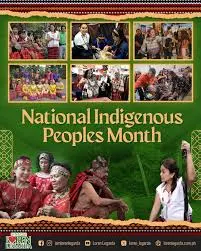
Celebrating Indigenous Peoples Month: A Time for Recognition, Respect, and Action

 October marks National Indigenous Peoples Month in the Philippines, a time to celebrate the rich diversity, resilience, and contributions of the country's indigenous communities. This year's theme, "Mga Katutubo at Katutubong Dunong: Pahalagahan, Pangalagaan at Parangalana" (Valuing, Nurturing, and Honoring Indigenous Peoples and Indigenous Knowledge), underscores the importance of recognizing, preserving, and promoting indigenous knowledge systems and practices. This observance serves as a crucial platform to advocate for the rights and cultural integrity of indigenous peoples, fostering a more inclusive and equitable society.

    As the 27th anniversary of the Indigenous Peoples Rights Act (IPRA) approaches National Indigenous Peoples Month 2024 offers a potent chance to draw attention to the continued hardships and victories of indigenous communities. Enacted in 1997 the IPRA seeks to acknowledge defend and advance indigenous peoples rights to their ancestral lands cultural heritage and self-determination. The advancement of indigenous rights is anchored by this legislation which also offers a framework for guaranteeing their involvement in decisions that impact their communities and way of life. 

https://images.app.goo.gl/xGcjMAmPX9HkGk8y9


       Beyond simple celebration National Indigenous Peoples Month represents a dedication to tackling the structural issues that indigenous communities face. Preserving their ancestral lands and resources fostering economic empowerment guaranteeing access to high-quality healthcare and education and fighting discrimination are all part of this. 

https://images.app.goo.gl/ABv6sLLckaJh7cLU7

     The month promotes a change in perspective by highlighting the significance of indigenous knowledge systems and the benefits of traditional practices in fields such as traditional medicine environmental conservation and sustainable agriculture. It also highlights the necessity of cooperation between the general public and indigenous communities in order to guarantee the preservation and revitalization of indigenous cultural expressions languages and the arts. 

https://images.app.goo.gl/66PtrR6taRSxUehL6

Wednesday, November 27, 2024

"The Golden Arinola"

 Mariano Quirino, a commissioned officer in the Spanish army, and Gregoria Rivera welcomed President Quirino into the world on November 16, 1890, in Vigan, Ilocos Sur. His parents gave him his first education. He enrolled in a private school to learn English grammar after they relocated to his mother's home province. After that, he moved to Aringay Elementary institution and eventually attended San Fernando, La Union, a provincial institution. The family went back to Vigan in 1904. Following that, Pidiong pursued his education in the town's high school before applying to teach at the Capariaan barrio school. 

Elpidio, who was fired with great passion, worked while pursuing his education in Manila. He began honing his oratory skills when he enrolled at Manila High School as a student. In order to pay his bills, he sketched and painted for magazines while working as a property clerk in the Manila police department.

He worked as a law clerk for the Philippine Commission, the upper house of the legislative system at the time, after graduating from the University of the Philippines in 1915 with a law degree. He transferred to the Philippine Senate after the Jones Act was approved in 1916, which replaced the Philippine Commission. He was appointed secretary by Manuel Quezon, the newly elected Senate President.

https://images.app.goo.gl/E55hUE38GDUUydY46

His political career began in 1919 when he was elected as a representative in his Ilocos Sur congressional district.

Shortly after, on January 16, 1921, he wed Alicia Syquia, a member of a prosperous Vigan family. In February 1945, during the height of the Manila Liberation Campaign, his wife and three of their children were massacred by the Japanese. The President of the Philippines from 1948 to 1953, was alleged to have owned a "golden arinola" and was subject to controversy.

Quirino was elected senator in 1925 at the relatively young age of 35. In 1931, he was elected to a second six-year term. He accompanied Manuel Quezon on the Philippine independence trip to Washington, DC, in 1934. The Tydings-McDuffie Act, which established July 4, 1946 as the day of Philippine independence, was passed thanks to the mission's efforts. Additionally, he was chosen to serve on the conference that produced the new Philippine Commonwealth's constitution. He later held positions in the Commonwealth administration as secretary of the interior and secretary of finance.

https://images.app.goo.gl/aYqtNmoNNpAWPwWr5

Under Manuel Roxas, the first president of the independent Philippines, he held the positions of Vice President and Secretary of Foreign Affairs following World War II. Quirino took over as president on April 15, 1948, following Roxas's death. The next year, he defeated Jose P. Laurel, the nominee of the Nacionalista, to win a four-year term as president on the Liberal Party ticket.

During his six years in office, Quirino oversaw significant postwar reconstruction, overall economic growth, and an increase in US financial assistance. He concentrated on two main objectives: complete economic mobilization and restoring public trust in the administration. He stepped up efforts to purge the corrupt from the government in order to accomplish the first goal. His second objective was to mobilize the nation's economic resources and usher in an era of industrialization by supporting the construction of many industrial units and projects at key locations throughout the nation.

The Burgos irrigation project in Zambales, the hydropower project in Lanao, the cement factory in Bacnotan, La Union, a network of roads throughout Mindanao, and numerous other new and essential enterprises that e
mployed thousands of people were some of these industrial accomplishments. The "Father of Philippine Industrialization" is Quirino as a result.

https://images.app.goo.gl/hao88vGRTAzBM1CM7

In 1953, Quirino ran for reelection but was defeated by Ramon Magsaysay. Quirino traveled to Japan in May 1955, mostly to recuperate. He received a rousing welcome in return for his kind deed of amnesty to Japanese prisoners of war who were then serving their sentences at Muntinlupa while he was president.

Following his term, he moved to his new rural residence in Novaliches, where he passed away on February 28, 1956, from a heart attack. 

Sunday, November 17, 2024

"The Climate Challenge: Resilience and Hope for the Filipino People"

      With abrupt and rapid environmental changes wreaking havoc on communities across, the effects of climate change on Filipinos' lives and living situations are becoming more and more apparent. The Philippines has historically been susceptible to typhoons, earthquakes, and volcanic eruptions due to its location along the typhoon belt and on the Pacific Ring of Fire. These risks have been further exacerbated by climate change, though, especially in the form of more frequent and powerful storms, increasing sea levels, and erratic weather patterns. Typhoons, which wreak havoc on rural and coastal communities and leave a trail of damage in their wake, are becoming more frequent and intense as global temperatures rise. The devastating effects of Typhoon Yolanda (Haiyan) in 2013, which forced millions of people to relocate and caused significant economic damage, serve as a sobering reminder of the threats faced by such extreme weather occurrences.

https://images.app.goo.gl/HvmE5JT2Uhu1GLX68

      Human activities including deforestation, unchecked urbanization, and improper land use practices are also contributing factors to the Philippines' environmental degradation. Deforestation, frequently for logging or agriculture, upsets ecosystems' natural equilibrium and causes soil erosion, which makes flooding and landslides worse during periods of intense precipitation. Unplanned urban growth causes informal settlements to establish in places vulnerable to natural disasters, where the infrastructure is insufficient to withstand the effects of earthquakes, flooding, and other natural disasters. Because these towns are frequently constructed on unsuitable terrain, the inhabitants are more susceptible to climate-related disasters. Many urban areas suffer from extreme air and water pollution, which exacerbates health risks and lowers quality of life. Inadequate waste management and pollution control also contribute to environmental degradation.
 
       Climate change is seriously disrupting agriculture, which provides a living for millions of Filipinos, in addition to environmental and infrastructure issues. Rising temperatures, protracted droughts, and unpredictable rainfall patterns endanger crop harvests, lowering farmers' incomes and food security. The growing frequency of extreme weather events puts additional burden on the agricultural sector, which is already susceptible because of limited access to resources, technology, and climate-resilient farming methods. Many rural populations experience chronic poverty and food insecurity in the absence of appropriate irrigation systems, soil management, and adaptable farming practices. Cities are under more strain as a result of rural residents moving to cities in pursuit of greater opportunities, which makes climate resilience and sustainable development even more difficult.


https://images.app.goo.gl/Kn1N3cemrqZkLMWu7

       In conclusion, both local human activity and global climatic trends are the main causes of environmental changes that impact Filipinos. A multimodal strategy is needed to address these issues, including investments in climate-resilient infrastructure and sustainable agriculture, enhanced disaster preparedness, and stricter environmental protection legislation. To strengthen resilience against climate change and safeguard the most vulnerable communities, society's various sectors—government, business, civil society, and individuals—must work together. The Philippines can only lessen the effects of climate change and guarantee a safer, more sustainable future for its citizens by implementing thorough adaptation plans and making a sustained commitment.
 

“Break the Prevalence, End the Violence: Protecting Children, Creating a Safe Philippines."

     The topic for 2024 National Children's Month (NCM), "Break the Prevalence, End the Violence: Protecting Children, Creating a Safe Philippines," emphasizes how urgent and consistent effort is needed to stop all types of violence against children. Children in the Philippines are still in danger from a variety of sources, including exploitation, human trafficking, and physical abuse and neglect. The theme for this year highlights the fact that violence against children is a pervasive and ongoing issue rather than an isolated one. Many Filipino children suffer injuries that can affect their physical, emotional, and mental health for a long time, whether at home, at school, or in their communities. The topic urges coordinated action to cease the cycle of violence and put an end to its pervasiveness.

https://images.app.goo.gl/GVUtR9o8fhaREo6q7

     The emphasis on fortifying the safeguards designed to protect children is a fundamental component of this theme. The Anti-Child Abuse Law and the Republic Act No. 7610 (Special Protection of Children Against Abuse, Exploitation, and Discrimination Act) are two examples of laws in the Philippines that are intended to safeguard children's rights, but their application is still uneven in many respects. This subject emphasizes how critical it is to enhance community-based child protection initiatives, legal procedures, and law enforcement. It promotes bolstering current regulations, bridging legal gaps, and making sure that protecting children is not just a legal issue but also one that is actively and strictly enforced. The objective is to guarantee that everyone in society, including governmental organizations, upholds the rights of children.

        The subject emphasizes the significance of a cultural change that places a higher priority on children's emotional and mental health in addition to legislative changes. In addition to physical abuse, a lot of Filipino children suffer from serious mental health issues, which are frequently brought on by neglect, bullying, and spousal abuse. In addition to eliminating physical damage, establishing a "safe Philippines" entails making sure that kids have the emotional support they require to flourish. Important elements of this endeavor include psychotherapy, mental health resources, and good parenting education. Furthermore, online safety has emerged as a top issue as technology plays a bigger part in kids' lives. New dangers brought about by the digital age include exposure to hazardous content, online exploitation, and cyberbullying.


https://images.app.goo.gl/bDcpz5sEyHdLFdRr7

     All things considered, the subject for the 2024 NCM serves as a potent reminder that everyone in society has a duty to provide a secure environment for children, not just parents and guardians. It urges everyone to work together to make sure kids are raised in safe surroundings and have access to the tools and assistance they require to grow up to be strong, resilient adults. The Philippines can progress toward a future in which every kid is genuinely safe, protected, and able to reach their full potential by cooperating.

"Uniting for Equality: Building an Inclusive Society Together"

 The theme of "WE for Gender Equality and an Inclusive Society" emphasizes how crucial group efforts are to establishing a societ...